

Table of Contents
- Understanding Swimbait Retrieves and Depth Control
- How to Rig Soft Plastic Swimbaits for Any Cover
- Best Swimbait Retrieve Techniques That Trigger Strikes
- Skipping Swimbaits Under Docks and Overhangs
- Rod, Reel, and Line Setup for Swimbait Fishing
- Post-Hookset Management and Landing Trophy Fish
- Conclusion: Building Confidence with Swimbaits
- Frequently Asked Questions
Last Updated: October 2, 2026
Understanding Swimbait Retrieves and Depth Control
Fish swimbaits catch fish because they look like an easy meal. The lure swims, wobbles, and kicks just like a baitfish. But knowing how to fish swimbaits well comes down to two things: how fast you reel and how deep you run the bait.
Most anglers lose fish because they fish the wrong depth. The bait swims above the strike zone, or it drags below it. Fix that and your catch rate climbs fast.
Independent Bait Company builds swimbaits for both saltwater and freshwater. That range matters, because a bait that swims well in a lake often fails in a bay.
The Countdown Method for Hitting Strike Zones
The countdown method is simple. Cast, let the bait sink, count the seconds, then start your retrieve.
Each swimbait sinks at its own rate. A slow sink bait drops a few feet per second. A fast sink bait drops much quicker.
Here is how to run it:
- Cast past your target and let the bait hit the water
- Count "one thousand one, one thousand two" as it sinks
- Start reeling at the count that puts you at the right depth
- Repeat the same count on every cast to stay in the zone
Once you get a bite, note the count. Then repeat it. That number is your strike zone for the day.
How to Rig Soft Plastic Swimbaits for Any Cover
Rigging decides whether your bait swims true or spins. A bait that rolls in the water will not trigger strikes. A bait that tracks straight and kicks will.
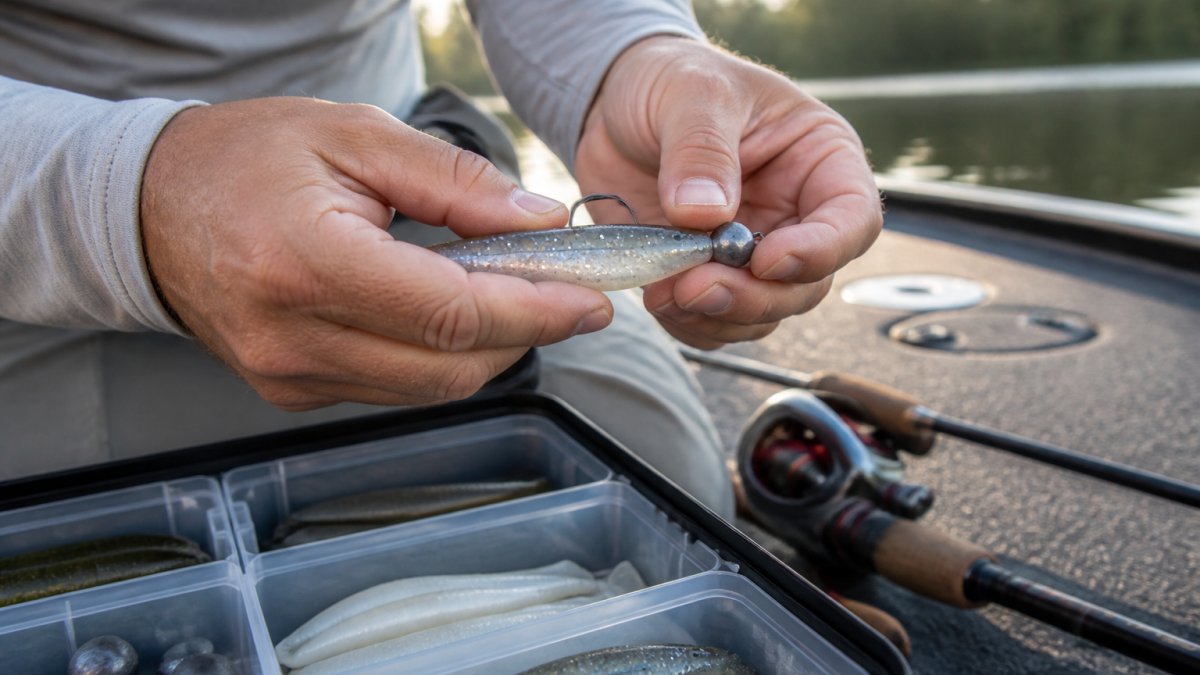
Start with a straight bait. Lay the hook along the top and check the length. The hook point should exit where the bait's back meets its tail.
Weedless Configurations for Kelp, Rocks, and Timber
Weedless rigging keeps your hook out of snags. In kelp, rocks, and timber, a bare hook grabs everything. A buried hook slides through.
To rig weedless:
- Push the hook point through the nose and out the belly
- Slide the bait up over the hook eye
- Turn the hook and bury the point just under the skin
- Test the action in the water before you cast
A weedless jig head with a wide-gap hook works well here. The hook stays covered until you set it.
At Independent Bait Company, our Swingers jig heads use Mustad EWG hooks and split rings built for this kind of work. The weedless design cuts through kelp and rock without hanging up.
Best Swimbait Retrieve Techniques That Trigger Strikes
The best swimbait retrieve techniques match the mood of the fish. Active fish chase fast baits. Lazy fish want a slow, steady swim.
Start with a medium, steady reel. That is your baseline. If nothing follows, change one thing at a time so you know what worked.
Try these retrieves:
- Slow roll: reel just fast enough to keep the tail kicking. On a 6.3:1 reel, that is roughly one handle turn per second. The bait stays high in the water column and looks like a baitfish cruising.
- Burn: reel fast to trigger reaction strikes. This works best with a 7.1:1 or faster reel. The bait rips through the strike zone and fish hit on instinct rather than inspection.
- Stop and go: reel three or four turns, pause for a two-count, then reel again. The bait flutters down on the pause, that fall is often when the strike comes.
- Rip and fall: snap the rod tip up, then drop it and let the bait sink on a semi-slack line. This mimics a baitfish that spooked. Keep a finger on the line during the fall so you feel the tick.
A follow with no strike tells you the fish is interested but not committed. Speed up, slow down, or change the cadence.
Varying Cadence and Speed to Match Fish Mood
Cadence is the rhythm of your retrieve. Change it and you change how the bait looks to a fish.
A steady reel looks like a healthy baitfish. A stuttered reel looks like a wounded one.
So mix it up. Reel three turns, pause, then burn two turns.
Rod angle matters here too. Holding the rod tip high keeps the bait shallow and gives it a tighter wobble.
One more variable: line diameter. Thicker line drags in the water and lifts the bait, which can kill the action on lighter swimbaits. If your bait is not tracking right, check your line before you blame the bait.
Skipping Swimbaits Under Docks and Overhangs
Skipping swimbaits under docks puts your bait where fish hide. Docks, overhangs, and low branches give fish shade and cover. Most anglers cast near them. Few cast under them.
To skip a swimbait:
- Use a low, sidearm cast
- Keep the rod tip close to the water
- Aim so the bait hits the surface flat
- Let the bait skip, then start your retrieve
A soft plastic bait skips better than a hard bait. It flattens on impact and slides across the surface.
Practice on open water first. Then move to docks once you can skip without backlash.
Rod, Reel, and Line Setup for Swimbait Fishing
The right rod, reel, and line make swimbait fishing easier. The wrong setup costs you fish and baits.
A medium-heavy rod with a fast tip works for most swimbaits. It has enough power to set the hook and enough flex to cast light baits.
For the reel, a gear ratio around 6:1 to 7:1 covers most retrieves. A faster reel helps with burning and skipping.
Line and Leader Selection by Swimbait Weight
Line choice depends on bait weight and cover. Heavier baits need stronger line. Clear water needs a lighter leader.
Thicker line has more water resistance. That drag lifts the bait and can make it roll or spin instead of tracking straight.
| Swimbait Weight | Main Line | Leader | Best For |
|---|---|---|---|
| Under 1/2 oz | 20 lb braid | 10-12 lb fluorocarbon | Open water, clear lakes |
| 1/2 to 1 oz | 30 lb braid | 15-20 lb fluorocarbon | Grass, light cover |
| Over 1 oz | 50 lb braid | 25-30 lb fluorocarbon | Kelp, rocks, timber |
Braid gives you casting distance and a solid hookset. Fluorocarbon leaders add abrasion resistance near rocks and wood.
Leader length is its own decision.
One more trade-off: braid has almost no stretch, so it transmits every head shake and every snag. That is good for feel, but it also means a violent head shake can pull the hook. Fluorocarbon has some stretch, which absorbs that shock. That is why the leader matters beyond abrasion, it is a shock absorber between the braid and the bait.
Post-Hookset Management and Landing Trophy Fish
The hookset is only half the job. What you do next decides whether the fish reaches the net.
Keep steady pressure after the hookset. A tight line stops the fish from throwing the hook.
Watch for these mistakes:
- Loosening the line when the fish jumps
- Reaching for the net too early
- Letting the fish run into cover
For big fish, tire them out before you land them. Let them run when they want to run.
A braided main line with a fluorocarbon leader helps here.
Conclusion: Building Confidence with Swimbaits
Swimbaits reward anglers who put in the time. The countdown method, weedless rigging, and varied retrieves all take practice. But once they click, you will fish them with confidence.
Independent Bait Company makes swimbaits and Swingers jig heads built for this kind of fishing. Our baits feature a natural side-to-side kicking motion, realistic 3D eyeball and gill plate details, and custom strike-inducing colors. The weedless jig heads handle kelp, rocks, and snags, and our versatile sizes cover different depths and conditions.
Get started with Independent Bait Company and fish your next swimbait session with gear built to trigger strikes.
Frequently Asked Questions
How do you fish with swimbaits for maximum strikes?
Start with a steady retrieve and vary your speed until you find what the fish want. Use the countdown method to target specific depths, then try a stop-and-go cadence to trigger reaction bites. Keep your rod tip at 10 o'clock and maintain line tension so you feel every bump. When fishing heavy cover, switch to a weedless rig and slow down your retrieve to keep the bait in the strike zone longer.
What is the best way to rig a soft plastic swimbait?
For open water, use a weighted swimbait hook with a screw-lock keeper to keep the bait running true. In heavy cover like kelp or timber, rig it weedless by burying the hook point slightly into the plastic. Match your hook size to the bait's profile so the bait swims naturally without rolling. A jig head with a durable hook and split ring works well for deeper presentations.
When is the best time of year to fish swimbaits?
Swimbaits work year-round, but they excel in spring and fall when baitfish are most active. In spring, target prespawn fish in shallow flats and near spawning bays. Fall brings baitfish schools into creeks and main-lake points, making swimbaits a top choice. During summer, fish deeper structure early and late in the day. Winter calls for slow, bottom-hugging retrieves in deeper water.
How do you fish swimbaits around docks and heavy cover?
Skip swimbaits under docks by using a low trajectory cast and a weedless rig. Let the bait sink on a controlled line, then retrieve with short hops or a steady crawl. Around heavy cover, use a jig head designed to cut through kelp and rocks without snagging. Keep your rod tip down and maintain contact so you can pull fish away from structure quickly after the hookset.